Pulchur Editorial Team
All products featured are independently selected by our editorial team. Some links may earn us a commission.
Pulchur Editorial Team
All products featured are independently selected by our editorial team. Some links may earn us a commission.
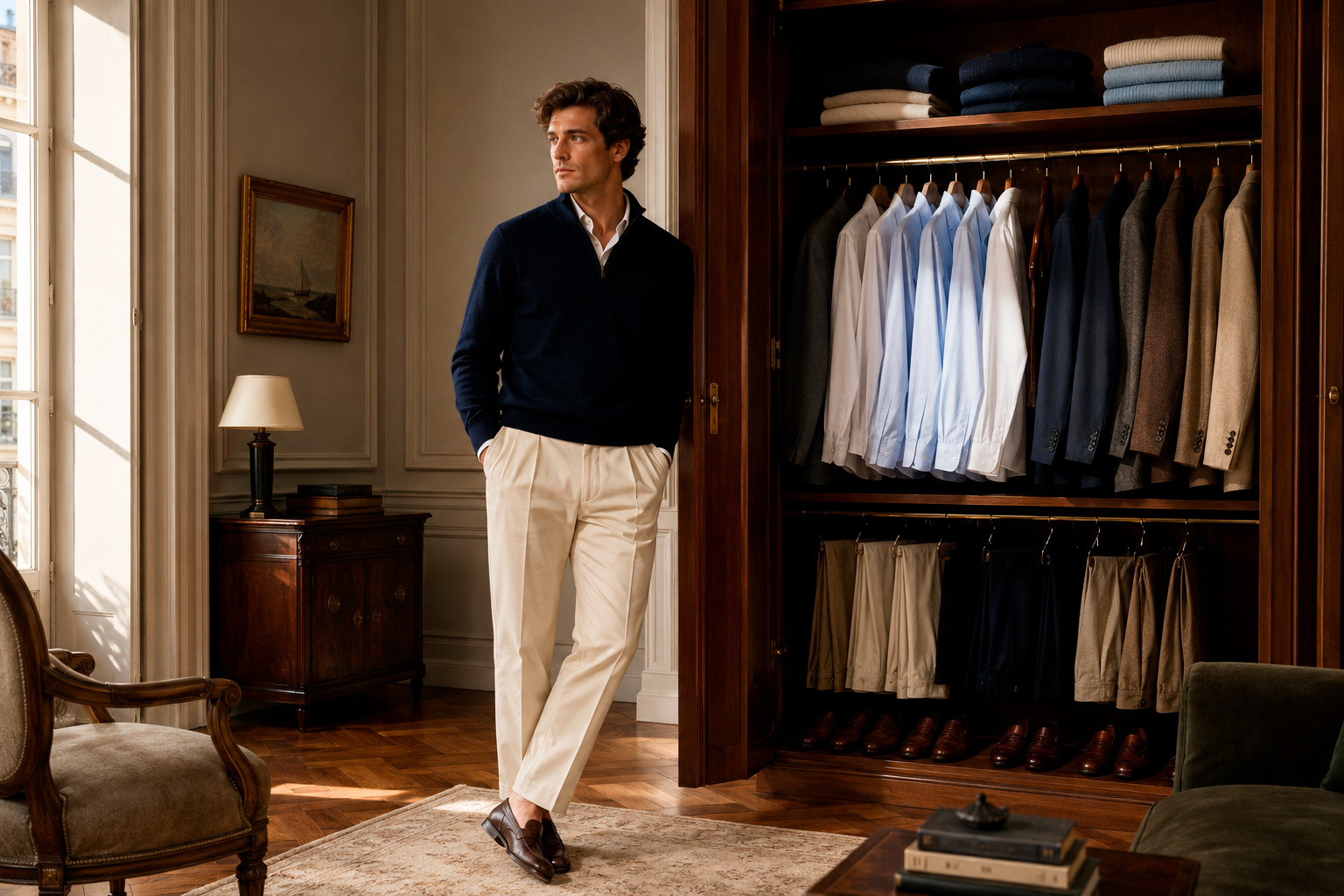
An old money capsule wardrobe is not about owning as little as possible.
It is about owning the right things.
The point is not minimalism for the sake of minimalism. It is having a wardrobe where almost every piece works with the others because the colours, fabrics, proportions, and level of formality all belong to the same world.
Old money style works best when it feels natural. A navy blazer should work with grey trousers, white denim, chinos, or a blue shirt. A pair of brown loafers should work with tailoring, knitwear, linen trousers, and relaxed weekend outfits. A cream knit should sit just as easily under a coat as it does over a shirt.
That is the real value of a capsule wardrobe. It removes the noise.
Instead of constantly chasing new outfits, you build a foundation of pieces that quietly make you look better every day.
The biggest mistake men make when trying to dress old money is buying isolated pieces.
A suede loafer here. A cable knit there. A blazer that looks good online but does not work with anything else in the wardrobe.
That is not style. That is collecting.
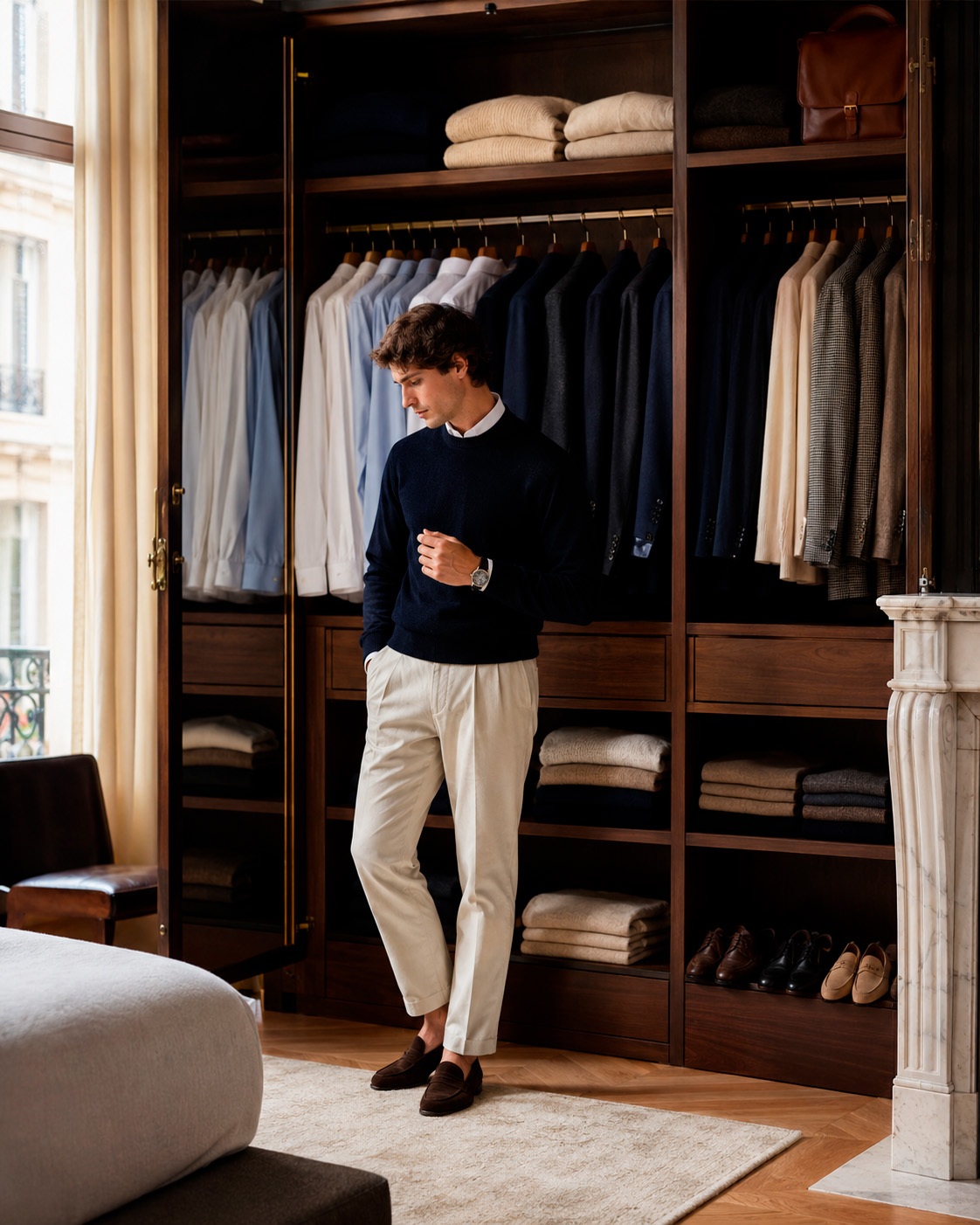
A proper old money capsule wardrobe starts with the full wardrobe in mind. Every piece should earn its place by working with several others. A shirt should not only look good by itself. It should work under knitwear, with trousers, under a jacket, and open over a T-shirt in summer.
The same applies to trousers, shoes, outerwear, and accessories. If something only works in one very specific outfit, it is probably not a foundation piece.
Old money dressing is built on repetition. The same navy blazer. The same white Oxford shirt. The same brown loafers. The same grey trousers. The refinement comes from how these pieces are worn, not from constantly replacing them.
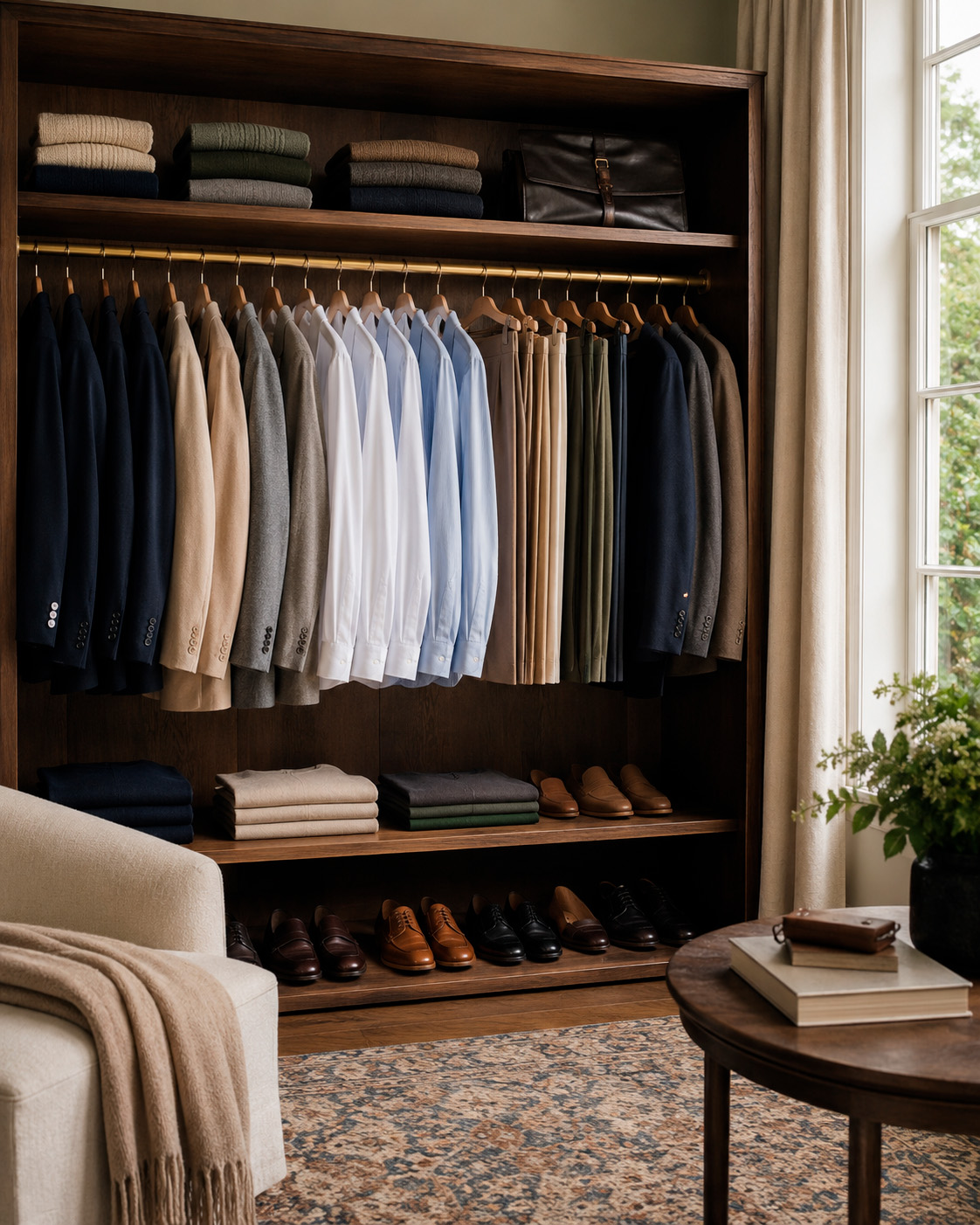
Colour is what makes the capsule work.
An old money wardrobe should be built around navy, white, cream, beige, grey, brown, olive, pale blue, and soft earth tones. These colours are not exciting in isolation, but together they create a wardrobe that feels calm, expensive, and easy to wear.
Navy is the anchor. It works for tailoring, knitwear, coats, polos, and casual jackets.
White and cream bring freshness. They work best in shirts, T-shirts, trousers, knitwear, and summer pieces.
Grey gives structure. Charcoal and mid-grey trousers are some of the most useful pieces a man can own.
Brown adds warmth. It is especially important in loafers, suede shoes, belts, outerwear, and knitwear.
Olive, tobacco, and pale blue should be used as supporting colours. They give the wardrobe character without making it feel loud.
The key is avoiding colours that make the outfit feel trend-driven. Bright tones can work, but they should never become the foundation. Old money style looks strongest when the palette feels settled.
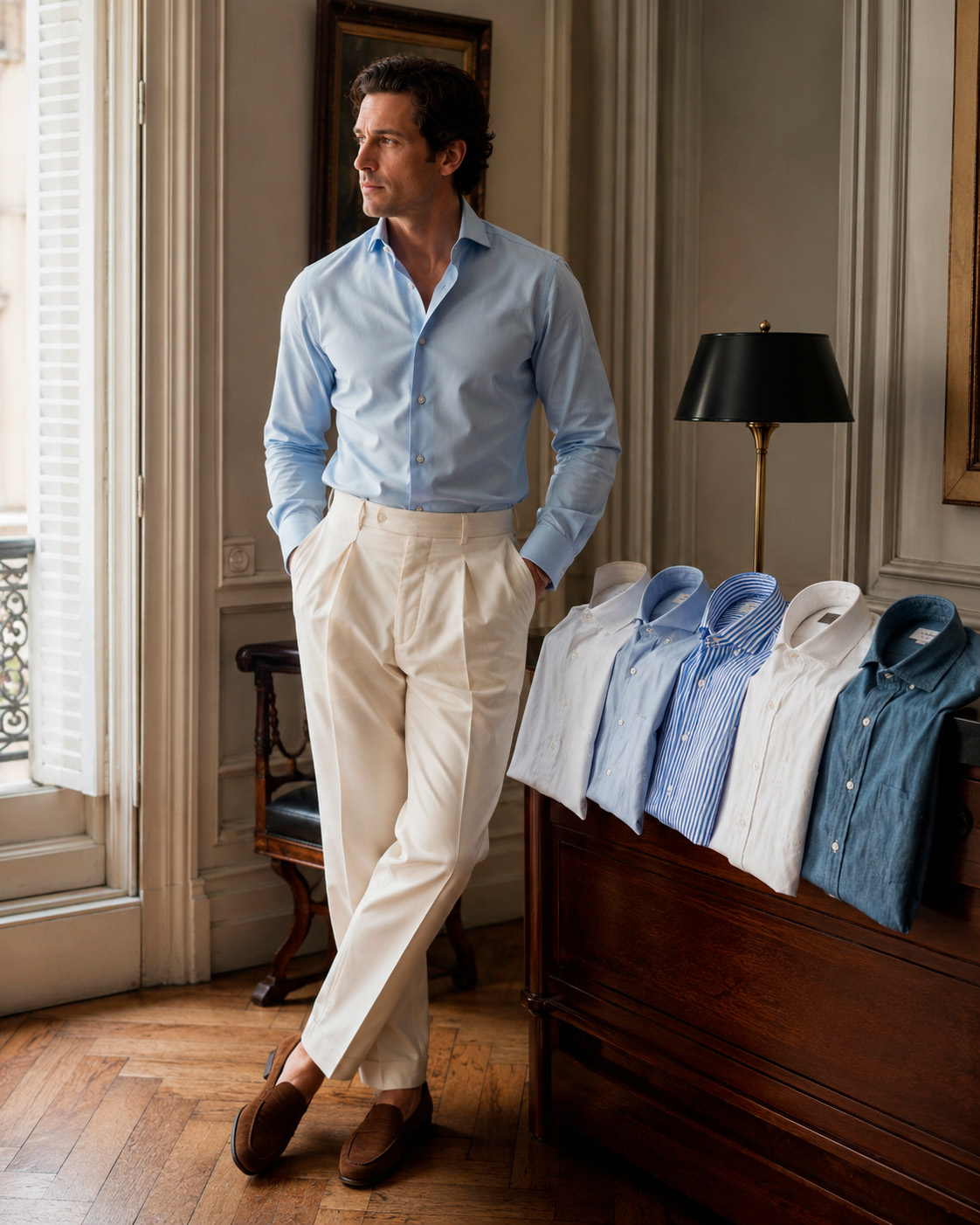
A good old money wardrobe needs strong shirts.
Start with a white Oxford shirt, a pale blue Oxford shirt, a white linen shirt, a striped shirt, and one softer casual shirt in chambray, brushed cotton, or lightweight denim.
These five shirts cover almost everything.
The white Oxford is the cleanest foundation. It works under a navy blazer, under a crewneck knit, with chinos, with tailoring, or worn casually with sleeves rolled.
The pale blue Oxford is softer and often easier to wear. It looks especially good with navy, beige, grey, cream, and brown.
The linen shirt is essential for summer. It brings ease without making the outfit look careless.
The striped shirt adds pattern while staying classic. Blue and white stripes are usually the safest choice.
The casual shirt gives the wardrobe a more relaxed side. It stops old money style from becoming too polished or stiff.
Fit matters here. The shirts should not be tight. They should sit cleanly through the shoulders, have enough room through the body, and look natural when worn untucked or under knitwear.
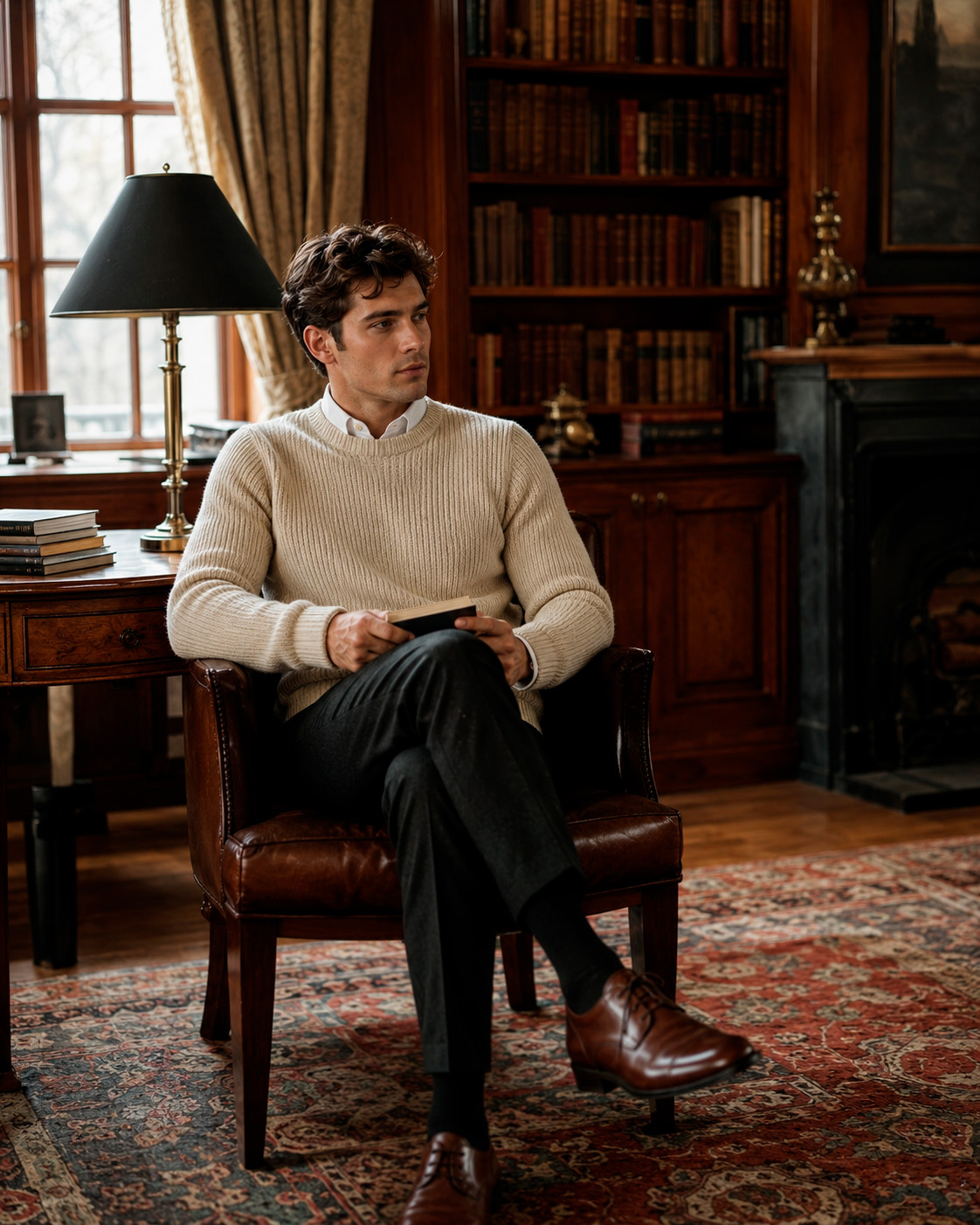
Knitwear is one of the most important parts of an old money capsule wardrobe because it adds texture without needing decoration.
Start with a navy crewneck, a cream crewneck, a grey sweater, a fine merino roll neck, and a knitted polo.
The navy crewneck is probably the most useful. Wear it over a white shirt, under a coat, with grey trousers, with chinos, or with denim.
The cream knit is softer and more seasonal. It works especially well with brown, navy, olive, and pale blue.
The grey sweater is understated and easy. It can make even a simple shirt-and-trouser combination feel more considered.
The roll neck gives the wardrobe a more elegant cold-weather option. It works under jackets and coats without looking as formal as a shirt and tie.
The knitted polo is the warm-weather version of old money knitwear. It feels more refined than a T-shirt, but more relaxed than a shirt.
The best knitwear should feel quiet. Avoid loud logos, extreme shapes, and overly synthetic textures. Wool, cashmere, merino, cotton, and linen blends are usually the right direction.
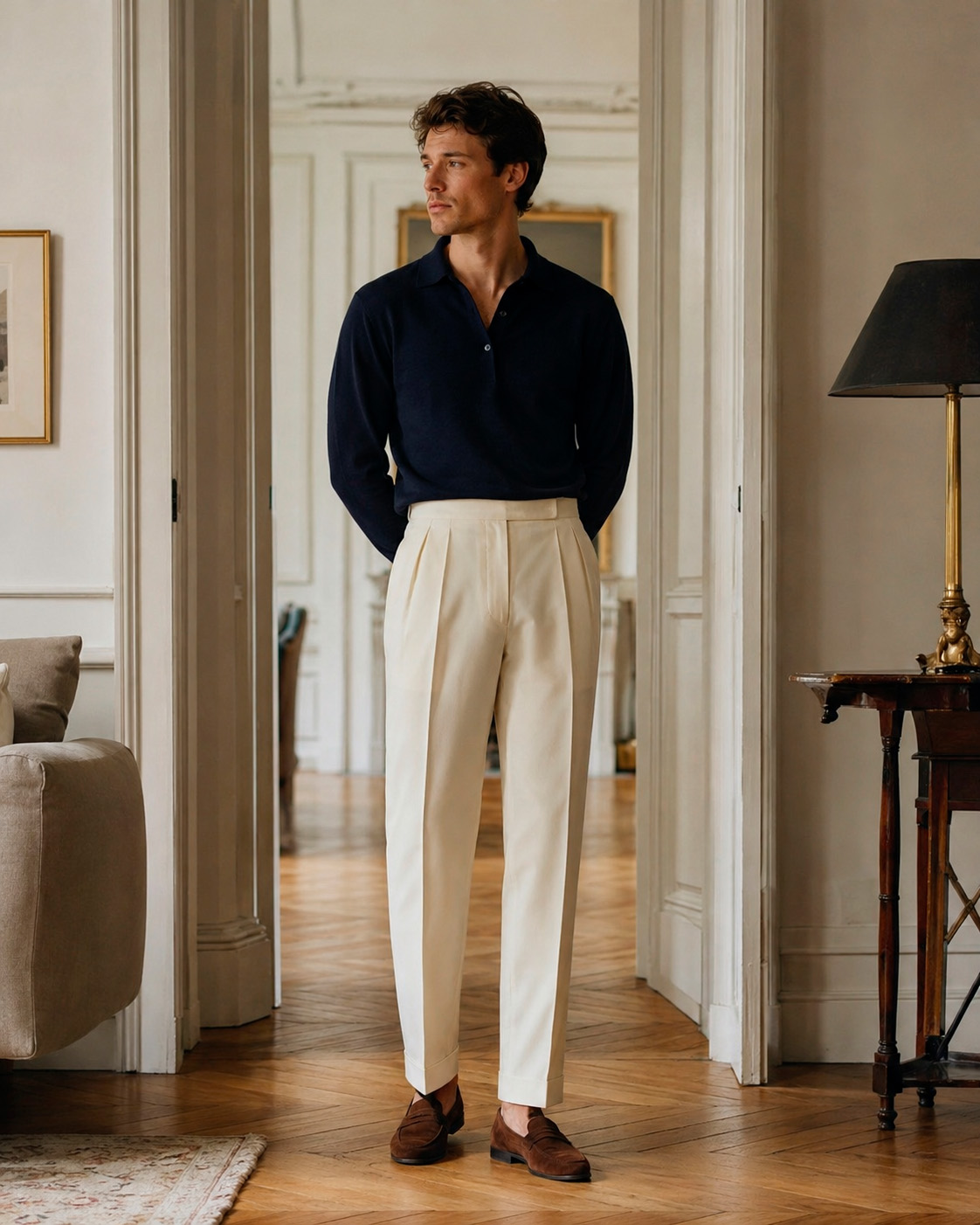
Trousers matter more than most men think.
A man can wear a beautiful shirt and expensive shoes, but if the trousers are too tight, too low-rise, or badly cut, the outfit will still look wrong.
For an old money capsule wardrobe, start with grey wool trousers, beige chinos, navy trousers, cream or off-white trousers, and a pair of clean dark jeans.
Grey wool trousers are essential because they make almost everything look more elegant. Wear them with shirts, knitwear, loafers, tailoring, and coats.
Beige chinos are useful for relaxed dressing. They should be clean, not overly slim, and not too casual.
Navy trousers give you a darker alternative when grey feels too formal.
Cream or off-white trousers are important for summer and coastal outfits. They bring the old money look closer to Riviera and resort dressing.
Dark jeans should be simple, straight, and free from heavy distressing. They are not the centre of the wardrobe, but they make the style easier to wear casually.
The ideal trouser shape is clean, slightly relaxed, and well-proportioned. Old money style does not need skinny trousers. It needs trousers that drape.
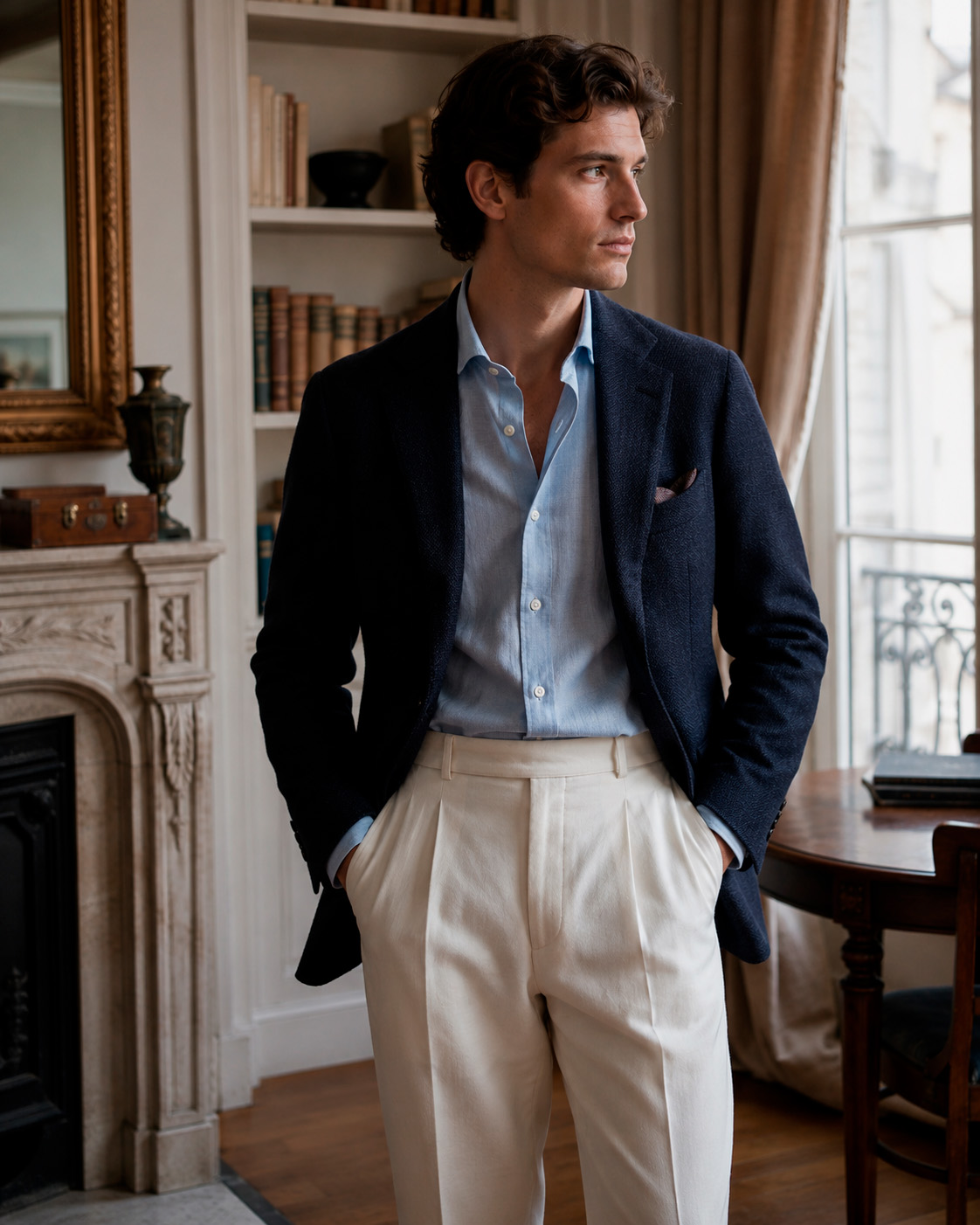
A navy blazer belongs in an old money wardrobe, but it needs to be the right kind.
The wrong navy blazer looks like officewear. The right one looks relaxed, elegant, and useful.
Look for soft shoulders, natural structure, good fabric, and a cut that works with both shirts and knitwear. It should be formal enough for dinner, but relaxed enough to wear with chinos or cream trousers.
Alongside the navy blazer, build around a suede jacket, a wool overcoat, a lightweight raincoat or trench, and one casual weekend jacket such as a chore jacket or Harrington.
The suede jacket adds warmth and richness. Brown, tobacco, and dark olive are usually stronger than black.
The wool overcoat gives winter outfits structure. Navy, camel, charcoal, or dark brown are the safest choices.
The raincoat or trench keeps the wardrobe practical without ruining the look.
The casual jacket makes the capsule wearable on normal days. Not every old money outfit should look dressed up.
Outerwear is important because it is often the first thing people see. A good coat or jacket can make a simple outfit feel finished before anything else is noticed.
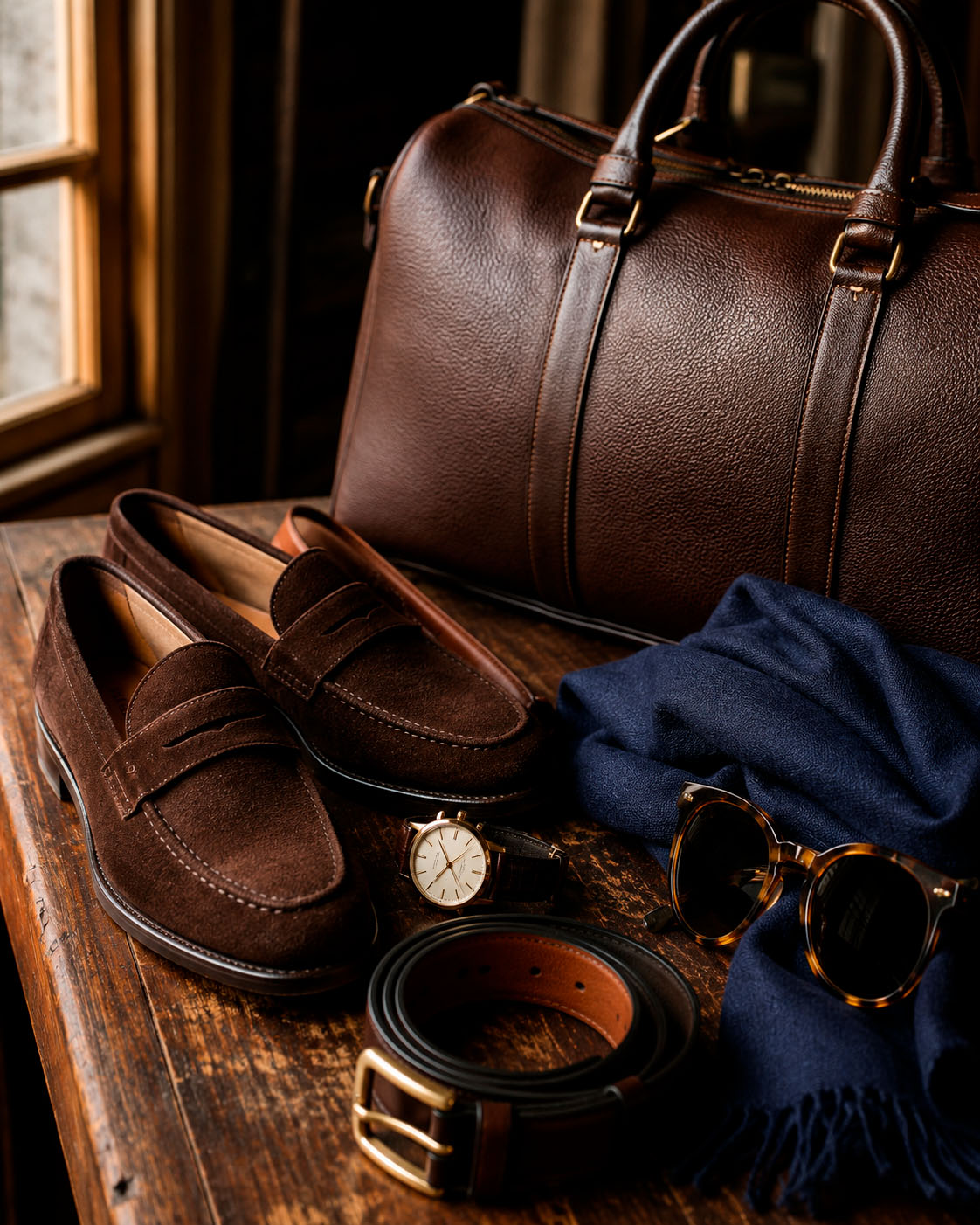
Shoes are one of the clearest signs of whether an old money wardrobe works.
Start with brown loafers, suede loafers, clean leather sneakers, boat shoes or driving shoes, and one smarter pair of leather shoes.
Brown loafers are the foundation. They work with tailoring, chinos, linen trousers, denim, and summer outfits.
Suede loafers feel softer and more relaxed. They are especially useful in spring and summer.
Clean leather sneakers are useful when the outfit needs to feel younger or more casual, but they should stay minimal. White, off-white, or dark brown usually work best.
Boat shoes or driving shoes make sense if your style leans coastal, relaxed, or summer-focused.
A smarter leather shoe is useful for formal occasions, but it should not dominate the wardrobe. Old money style is usually at its best when it looks elegant without looking overly dressed.
The same restraint applies to accessories. A leather belt, woven belt, simple watch, classic sunglasses, scarf, and good bag are enough for most men.
Accessories should make the wardrobe feel lived in. They should never look like they were added just to signal wealth.
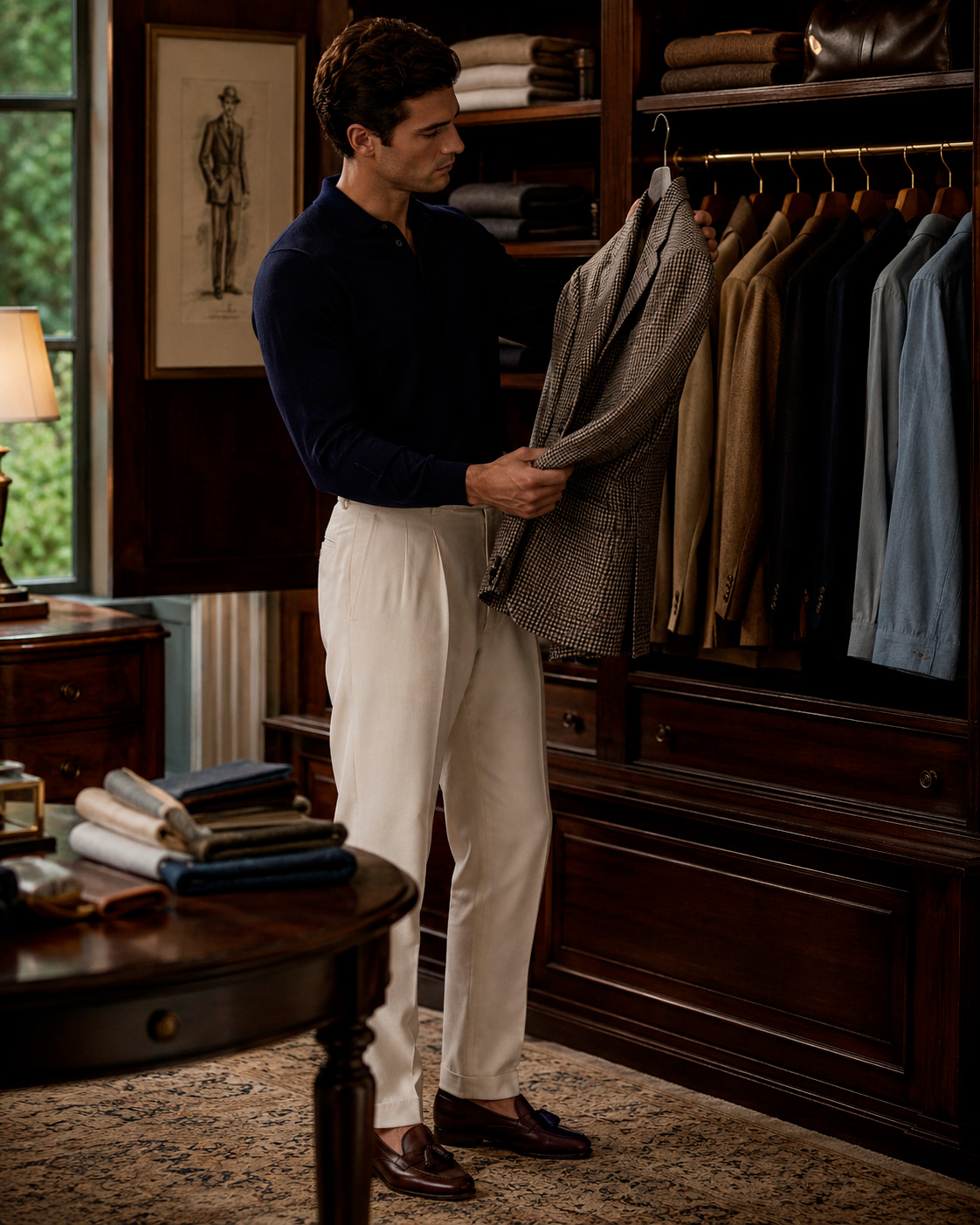
The best old money capsule wardrobe is not built quickly.
It is built slowly, with better judgment each time.
Do not buy a blazer just because you need a blazer. Wait for the right cut, fabric, and colour. Do not buy loafers because they look old money in a photo. Make sure they work with your trousers, your climate, and your actual life.
This style depends on standards. Fabric matters. Fit matters. Colour matters. How often you can wear the piece matters.
A useful rule is simple: before buying anything, ask whether it works with at least five pieces you already own. If it does not, it might still be a good item, but it is probably not a capsule item.
Old money style is not about having endless options. It is about having fewer pieces with more range.
That is what makes the wardrobe feel refined. Not the number of garments, not the brands, and not the price tags.
Just a clear point of view, repeated well.