Pulchur Editorial Team
All products featured are independently selected by our editorial team. Some links may earn us a commission.
Pulchur Editorial Team
All products featured are independently selected by our editorial team. Some links may earn us a commission.


When it comes to building a strong wardrobe, few categories matter more than outerwear. The right coat does more than protect you from the cold or the rain. It shapes your silhouette, changes the tone of an outfit, and often becomes the first thing people notice. A sharp overcoat can make even simple trousers and knitwear look refined, while a rugged duffle coat or practical car coat can give an outfit a more relaxed, everyday feel.
That is why understanding the different types of coats for men matters. Not every coat serves the same purpose, and not every style fits the same wardrobe. Some are dressier, some are more casual, and some sit somewhere in between. In this guide, we’ll break down the most important types of men’s coats, what makes each one distinct, and how to think about wearing them well.

The overcoat is one of the most timeless and versatile coats a man can own. Traditionally made from wool, it is designed to be worn over tailoring, knitwear, or layered cold-weather outfits. It usually falls somewhere around the knee, although lengths can vary, and it tends to have a clean, structured silhouette.
What makes the overcoat so useful is its flexibility. In darker shades like charcoal, navy, or black, it feels polished and formal. In camel or softer brown tones, it can look more relaxed and stylish while still keeping that classic feel. For many men, the overcoat is the safest first investment because it works with so many wardrobes.
An overcoat pairs especially well with knitwear, tailored trousers, boots, and loafers. If your style leans classic, understated, or elegant, this is often the coat that makes the most sense. It also fits naturally into wardrobes inspired by old money style, minimal dressing, or refined winter menswear.

The Chesterfield coat is closely related to the overcoat, but it carries a slightly more formal and traditional identity. It is known for its clean front, tailored shape, and often subtle detailing such as a velvet collar in more classic versions. It has long been associated with dressier menswear and city tailoring.
Compared with a general overcoat, the Chesterfield usually feels sharper and more reserved. It works best for men who want a coat that sits comfortably over suiting or smarter combinations. While modern wardrobes have become more relaxed, the Chesterfield still has a place because of how elegant and composed it looks.
For someone building a classic winter wardrobe, a Chesterfield can be an excellent option if the goal is sophistication rather than ruggedness or trendiness. It is less casual than many modern coat styles, but that is exactly what gives it its appeal.
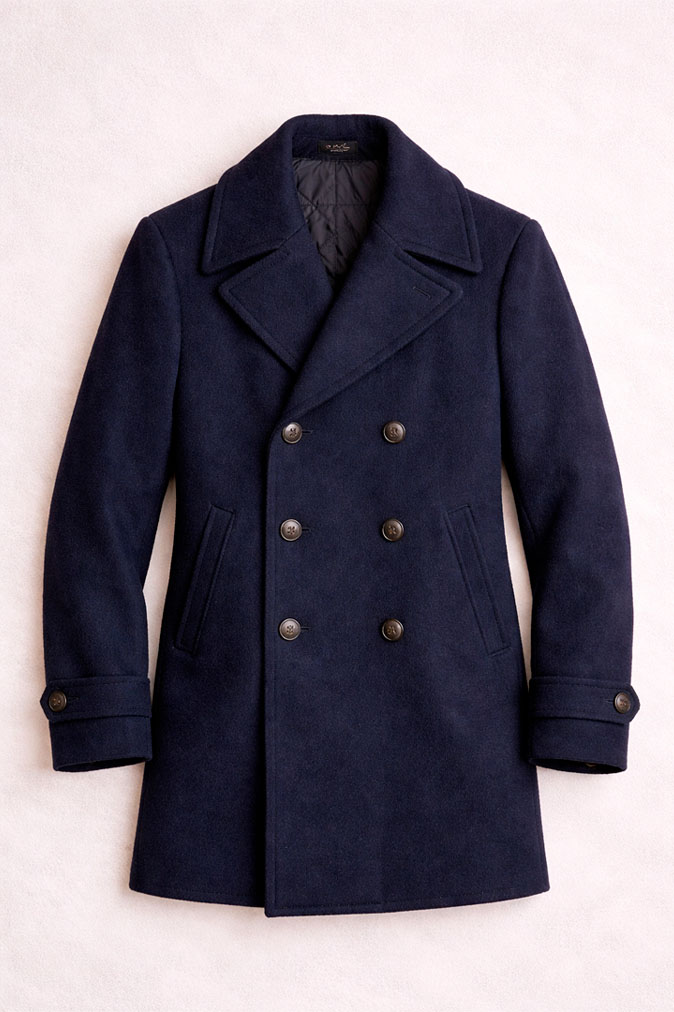
The peacoat is shorter, more compact, and more rugged than the longer coat styles above. Originally naval in origin, it is traditionally double-breasted and made from heavy wool, with broad lapels and a strong, practical silhouette. The classic color is navy, though charcoal and black are also common.
What makes the peacoat so appealing is its balance. It feels masculine, structured, and substantial, but it is also easy to wear. Because it is shorter, it tends to work well for everyday use, especially for men who want warmth without the dramatic length of an overcoat.
A peacoat pairs naturally with denim, chunky knitwear, boots, and heavier winter trousers. It can still be dressed up, but it usually feels more casual and functional than an overcoat or Chesterfield. For many men, it is one of the easiest coat styles to wear regularly.

Few coats are as recognizable as the trench coat. Originally developed as military outerwear, the trench is typically made in a lighter, weather-resistant fabric and includes details such as a belt, storm flap, and structured collar. While beige or khaki is the most iconic version, darker colors like navy and black can make it feel more modern and versatile.
The trench coat is ideal for transitional weather. It is not mainly about deep winter warmth; it is about layering, elegance, and protection from wind and rain. Because of that, it works especially well in spring and autumn wardrobes.
Stylistically, the trench coat carries a distinct mood. It can look sharp and city-focused with tailored trousers and leather shoes, but it can also be worn more casually with relaxed trousers and knitwear. The key is avoiding overly stiff styling. A trench looks best when it feels natural rather than forced.
For men who want something polished but less heavy than a wool overcoat, the trench coat is one of the best options available.

The duffle coat stands apart from the others because of its more casual and heritage-inspired character. It is usually made from thick wool and is best known for its toggle fastenings, hood, and slightly roomier shape. It has a practical, youthful energy that feels different from the sharper lines of an overcoat or trench.
A duffle coat works best in relaxed wardrobes. It pairs well with denim, cords, chunky sweaters, scarves, and boots. While it may not be the first choice for formal dressing, it offers charm and warmth in a way that feels approachable and easy.
For men who prefer classic casualwear or want a coat with a more rugged, traditional personality, the duffle coat is a strong choice. It is especially good for colder months when layering and texture matter.

The car coat is a simple, practical coat that usually falls shorter than an overcoat and longer than a jacket. It was originally designed for ease of movement, which is why it tends to have a straightforward silhouette and minimal fuss. In modern wardrobes, the car coat is often one of the most wearable options because it sits so comfortably between smart and casual.
A car coat can be made in wool, cotton, or technical fabrics, which gives it a wide range of uses. Wool versions can look quite refined, while cotton or technical versions tend to feel more relaxed and functional. That versatility is its biggest strength.
For men who want something clean and understated, the car coat is often overlooked but very useful. It works well over knitwear, shirts, casual tailoring, and simple everyday outfits without feeling too formal or too rugged.
The best coat for you depends on three main things: your lifestyle, your wardrobe, and the impression you want your clothes to give.
If you wear tailoring often or want one coat that instantly makes your outfits look sharper, an overcoat or Chesterfield is usually the strongest choice. If your style leans classic but relaxed, a polo coat offers warmth and elegance with more personality. If you need something practical for daily wear, a peacoat or car coat may fit your life better. And if you want a lighter piece for rain and transitional weather, the trench coat is hard to beat.
You should also think about length, fabric, and color. Longer coats tend to feel dressier and more dramatic. Wool brings warmth and classic structure. Cotton and technical blends often feel lighter and more casual. In terms of color, navy, charcoal, black, camel, and olive tend to be the most versatile options.
Most importantly, choose a coat that fits the rest of your wardrobe. The best coat is not necessarily the one that looks best on its own. It is the one that works naturally with your trousers, knitwear, shoes, and overall style.